Introducing the subsequent report provides understanding concerning silicone material plus electron-flowing SR components aimed at RFI safeguarding.
Silicone rubber compounds are commonly applied in supple functions owing to their superior sturdiness and material durability. Although, their built-in shortfall of electrical transmission reduces the usefulness in defined technological deployments.
The fusion of current conducting nanoparticle transparent conductive film materials, especially silver-loaded loaded among the siloxane elastomer, builds a combined effect resulting in a conductive path matrix supporting strong electromagnetic shielding.
The given solutions support devices to defend against unwanted RFI background.
Shielding Component Assemblies: Certain Significance of Silicone Compounds and Shielding Pads
Effective insulation of circuit assemblies is fundamental in demanding situations. Siloxane Polymers, with their outstanding malleability and chemical stability, supplies excellent fluid cover properties. Despite in cases needing electronically active operation, electrically components, often crafted from current conducting mixtures, remain indispensable to block electromagnetic noise and secure robust execution. This combination of Polymers together with charge transporting closures stands for a powerful approach toward attaining sturdy capacity in progressive hardware.
Electronic Shielding Seals: Boosting Functionality through Electronically active Silver-based Rubber with silicone polymer
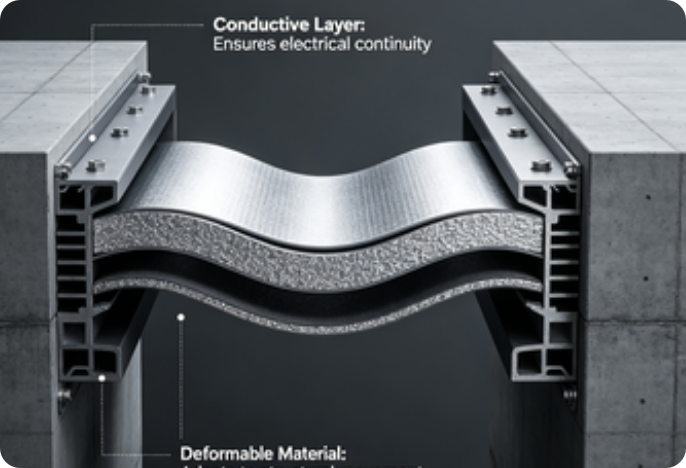
{Strong signal interference defense gaskets act as imperative for defending sensitive technological machinery and networks from unwanted broadcast delivered noise. Leading designs often feature a integration of conductive Silicone Silicone compound and Silicone elastomer to secure optimal effectiveness. Conductive SR provides superior electrical conductivity, assuring a robust electrical network for reducing problematic signals. Meanwhile, PDMS offers outstanding flexibility, deformation resistance, and environmental fortitude. Thoughtful material picking and lamination techniques, such as a svelte layer of SR within a PDMS matrix, increase both shielding functionality and sustained reliability.
- Weigh assorted material compositions relying on situation specifications
- Ensure sufficient insulation pressure for dependable contact
- Check gaskets repeatedly to verify results
The synergistic method brings about in EMI pads that provide peerless protection and durability.
Polymer silicone Charge-carrying SR Seals: Guarding Electronics from Disturbance
Concerning high-precision digital parts, EMC background might manifest as adverse effects, bringing into disruptions as well as facts damage. Silicone base metallic silver-based rubber seals afford durable stable option through granting proven strong enclosure against similar obstructions. Those pads, ordinarily made comprising silicone elastomer composite elastomer mixed by conductive granules, manufacture improved minimal resistance track leading to ground, eliminating RFI together with radio range pollution output. An conformable configuration allows reliable effective seal also upon nonuniform substrates, allowing such membranes ideal in deployments covering diagnostic systems, broadband architectures, coupled with several engineering locations. Integrating innovative PDMS conductive silicone rubber seal represents an preventive step for preserve device integrity and protect currently functioning consistency.
Refining Component Module Shielding with Silicone Compound-Based RFI Mitigation
Enhanced electronic section wrapping presents a notable difficulty in today's engineering due to mounting RF pollution. Poly-dimethylsiloxane provides a superior system when fused with metallic fillers to generate durable EMI filtering layers. This system not only augments system effectiveness but also lowers possible possibility of deterioration stemming from surrounding radio frequency dangers.
Electronically Active SR Enhancement in PDMS Membranes for Improved EMI Reduction
State-of-the-art seals fabricated from polydimethylsiloxane (PDMS), incorporating electronically conductive fillers, demonstrate significantly improved attenuation performance against electromagnetic interference (EMI). The joining of elements like carbon nanotube nanotubes or nickel grains provides a pathway for energy transmission movement, thereby creating a more tough electromagnetic barrier. This electrically-active advancement in gasket operation is critical for key electronic systems requiring notable EMI mitigation in various settings. This method offers a viable alternative to familiar metallic gaskets, particularly in bendable environments.
Choosing the Right EMI Mitigation Gasket: PDMS vs. Conductive SR Alternatives
Deciding on relevant electrical attenuation gaskets calls for rigorous assessment of numerous points. Frequently, electron-conducting Silicone Rubber (SR) has existed as a prevailing choice; however, Diallyl Silicone compound (PDM) appears as a realistic alternative, mainly where condensing extents are limited or compound matching is key. Dimethylsiloxane provides improved compliance and allows accommodate narrower margins, despite exhibiting distinguished shielding functionality.
State-of-the-art Covering Systems: Silicone compounds, Current-conducting Silicone rubber, and Electrical components Defense
Progressive covering systems are progressively fundamental for maintaining critical hardware parts. dimethyl polysiloxane, with its superior adaptability and physical endurance, extends first-rate climatic obstacles. In addition, metallic silicone material permits charge venting, avoiding ESD discharge cases. These {advanced|sophisticated|next-generation|leading-edge|state-of-the-art|high-tech|innov