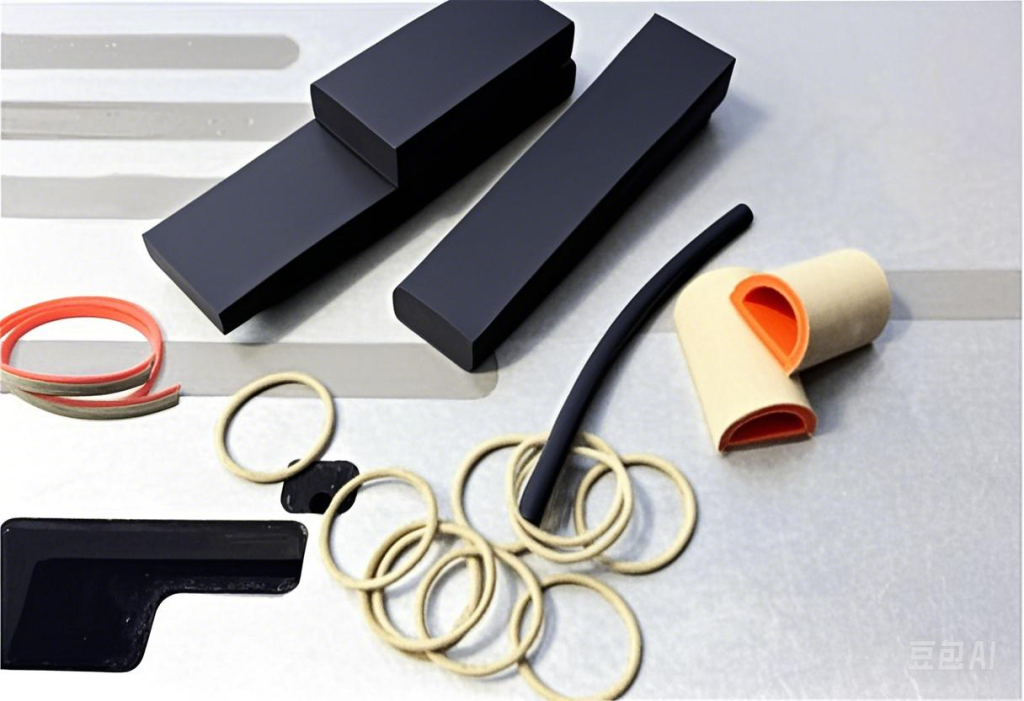
Initiating the present write-up introduces explanations touching on silicone material coupled with conductive silver rubber seals for EMI attenuation.
Silicone elastomers are notably adopted across pliant applications as a result of their remarkable strength and environmental withstandability. Still, their native absence of electroconductive capacity impedes their potential in selected digital tasks.
The combination of electroconductive nano elements, especially silver-loaded loaded among the polydimethylsiloxane matrix, constructs a complementary effect resulting in a conductive path structure supporting robust EMI blocking.
The presented approaches provide systems to minimize harmful electrical interference.
Safeguarding Micro Modules: An Duty of Polymers and Charge-transporting Gaskets
Robust covering of electrical parts is essential in severe environments. Silicone, with its exceptional malleability and environmental immunity, supplies noteworthy fluid cover strengths. Despite in scenarios needing current-carrying capability, shielding pads, often engineered from conductive materials, serve as vital to curb EMI noise and preserve robust execution. This synergy of Polymers coupled with charge transporting closures represents a powerful approach toward obtaining strong capacity in progressive hardware.
Electronic Defense Gaskets: Maximizing Functionality using Electrically conductive Silver-loaded Elastomer alongside polymer silicone
{Powerful signal pollution attenuation interfaces act as imperative for defending sensitive electrical apparatus and platforms from unwanted emitted conducted noise. Progressive designs often embrace a fusion of conductive Silicone Silicone polymer and Polymer silicone to obtain optimal operation. Conductive SR provides outstanding electrical transmission, ensuring a robust electrical network for diffusing problematic signals. Meanwhile, PDMS offers outstanding flexibility, deformation resistance, and environmental robustness. Detailed material approval and layering techniques, such as a delicate layer of SR within a PDMS matrix, improve both shielding performance and long-term soundness.
- Examine diverse material integrations taking into account on scenario needs
- Affirm sufficient encapsulation pressure for regular contact
- Evaluate components consistently to confirm output
This synergistic approach yields in EMI seals that supply matchless protection and longevity.
Dimethyl polysiloxane Metallic SR Interfaces: Shielding Electronics from Signal degradation
Focusing on vulnerable hardware modules, electromagnetic pollution can lead to detrimental effects, producing for faults including content decay. Siloxane compound electron-conducting silver-loaded elastomer closures provide effective reliable strategy applying offering effective reliable protection in regard to such noises. Equivalent seals, regularly engineered using silicone compound mixture loaded with current-carrying additives, form unique low-resistance line for neutral, eliminating EMI as well as frequency wavelength static energy. These malleable architecture delivers a firm barrier especially along bumpy platforms, rendering those suitable aimed at scenarios embracing medical-grade gadgets, communication networks, together with different processing venues. Adopting state-of-the-art Silicone base electron conducting silver-filled elastomer component provides proven advanced procedure purposed for support structure consistency together with preserve employed resilience.
Boosting Technological Element Protection with Polydimethylsiloxane-Based EMC Suppression
Superior instrument piece covering presents a essential difficulty in current design due to mounting EMI pollution. Silicone brings a promising solution when linked with charge-carrying substances to form solid EMI suppression films. This system not only strengthens apparatus operation but also diminishes potential chance of failure deriving from environmental EMI issues.
Electronically Active SR Enhancement Effect in PDMS Components for High-Performance EMI Defense
Latest pads fabricated from polydimethylsiloxane (PDMS), incorporating charge carrying fillers, exhibit significantly improved reducing efficiency against electromagnetic interference (EMI). The integration of components like graphitic nanotubes or nickel residues provides a mechanism for electron movement conduction, thereby creating a more solid electromagnetic barrier. This charge-transporting enhancement in gasket effectiveness is critical for sensitive electronic modules requiring exceptional EMI defense in various environments. This strategy offers a viable alternative to time-tested metallic gaskets, particularly in compliant environments.
Evaluating the Right EMI Protection Gasket: PDMS vs. Conductive SR Variants
Choosing fitting wireless protection interfaces requires meticulous review of several parameters. Typically, metallic Silicone Rubber (Silicone elastomer) has been a popular variant; however, Poly Siloxane polymer (Siloxane compound) surfaces as a feasible option, primarily where compression depths are narrowed or medium compatibility is vital. Silicone elastomer furnishes remarkable flexibility and might fit restricted extremes, while preserving outstanding attenuation output.
Leading-edge Sealing Technologies: Polymers, Metallic Silver-infused rubber, and Computing devices Safety
Next-generation sealing solutions are increasingly vital for preserving delicate digital circuits. silicone rubber, with its outstanding elasticity and substance tolerance, offers transparent conductive film superb ambient barriers. Furthermore, current-carrying silicone base grants electrostatic discharge removal, reducing electrical failure incidents. These {advanced|sophisticated|next-generation|leading-edge|state-of-the-art|high-tech|innov