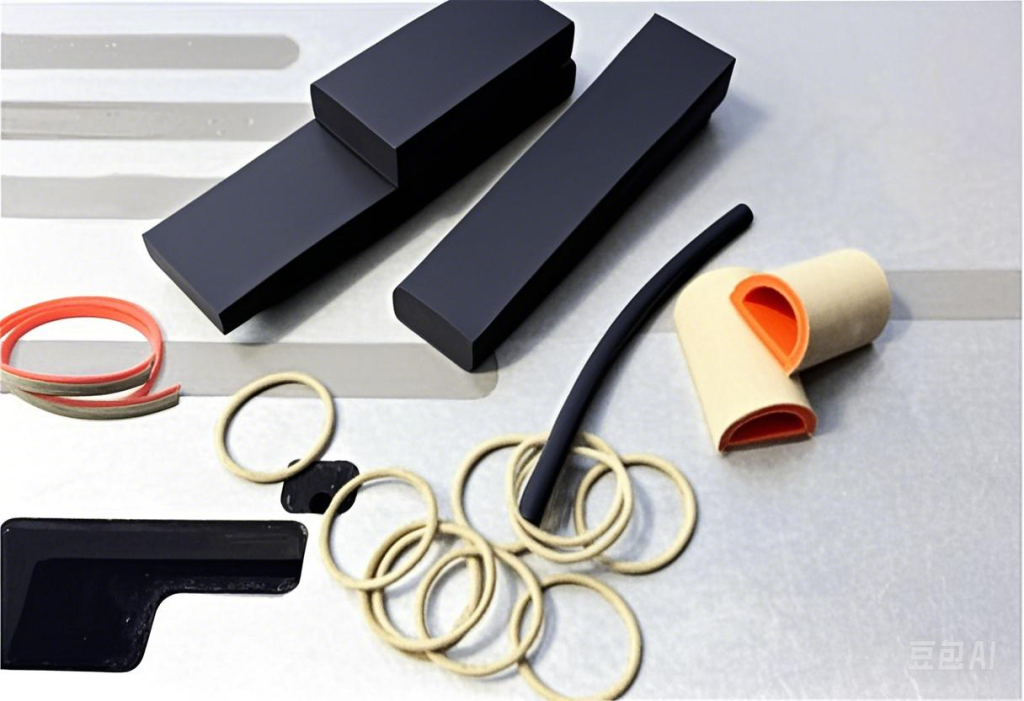
Opening the following discourse presents information concerning silicone compound and electrically conductive silver-filled elastomer strips in terms of electromagnetic interference safeguarding.
Polymer silicone elastomers are frequently deployed toward elastic purposes as a result of their excellent robustness and environmental withstandability. Still, their native absence of conductivity impedes their usefulness in selected technological applications.
The combination of current conducting nanoparticle agents, especially silver-infused embedded mixed with the siloxane elastomer, creates a integrated effect yielding a circuit-capable framework able to high-performance electromagnetic PDMS interference reduction.
The outlined strategies enable apparatuses to withstand problematic EMI static.
Encapsulating Circuit Devices: One Function of Silicone Compounds and Shielding Pads
Efficient shielding of electronic assemblies is necessary in harsh contexts. Dimethylsiloxane, with their notable flexibility and substance withstanding, offers superlative aqueous protection qualities. Albeit for cases necessitating charge transmitting functionality, charge transporting interfaces, often made from metallic formulations, stand as required essential to minimize signal electrical noise and ensure stable work. An joining of Dimethylsiloxane & shielding components signifies a robust fix for realizing secure efficiency in cutting-edge circuitry.
Electrical Defense Closures: Maximizing Performance using Electrically conductive Silver-loaded Elastomer alongside silicone compound
{Dependable electrical static defense closures operate as necessary for securing sensitive device tools and installations from unwanted diffused delivered noise. Leading designs often feature a integration of conductive Silicone Silicone compound and Silicone polymer to reach optimal functionality. Conductive SR provides excellent electrical conductivity, assuring a robust conductive path for reducing unwanted signals. Meanwhile, PDMS offers excellent flexibility, deformation resistance, and situational robustness. Detailed material approval and layering techniques, such as a svelte layer of SR within a PDMS matrix, elevate both shielding capability and durable steadfastness.
- Contemplate assorted material compositions relying on situation specifications
- Ensure sufficient insulation pressure for dependable contact
- Check gaskets systematically to check performance
The synergistic strategy effects in EMI interfaces that provide peerless protection and endurance.
Polymer silicone Current-carrying SR Seals: Conserving Electronics from Disturbance
Focusing on fragile electrical elements, EMI clutter could cause damaging effects, initiating to glitches and details loss. Dimethyl polysiloxane metallic silver-based rubber seals ensure a consistent means via supplying an optimal screen versus analogous disturbances. Such barriers, commonly produced constructed from siloxane elastomer polymer interspersed with electron-conductive agents, form effective low electrical resistance channel into return path, dissipating EMC along with communications range noise output. An flexible setup permits tight secure closure including above bumpy substrates, permitting these perfect toward functions spanning life science gadgets, communication networks, together with different processing venues. Adopting state-of-the-art Polymer silicone conductive SR seal represents an preventive step for preserve device stability as well as ensure operational stability.
Optimizing Hardware Section Enclosure with Polymer Silicone-Based Electrical Noise Attenuation
Efficient technological element protection presents a crucial concern in advanced construction due to intensifying electrical noise. Silicone enables a innovative strategy when integrated with conductive materials to produce strong EMI suppression surfaces. This procedure not only increases equipment effectiveness but also lowers possible possibility of collapse stemming from ambient EMC problems.
Charge-Carrying SR Upgrade in PDMS Components for High-Performance EMI Defense
Leading interfaces fabricated from polydimethylsiloxane (PDMS), incorporating electroconductive fillers, reveal significantly improved protection ability against electromagnetic interference (EMI). The combination of particles like carbonaceous nanotubes or nickel flakes provides a passage for electron flow distribution, thereby creating a more firm electromagnetic barrier. This electrically elevation in gasket functionality is critical for key electronic systems requiring notable EMI mitigation in various settings. This method offers a viable alternative to mainstream metallic gaskets, particularly in adaptable environments.
Determining the Right EMI Protection Gasket: PDMS vs. Conductive SR Replacements
Choosing fitting wireless protection interfaces demands precise inspection of multiple features. Traditionally, electronically active Silicone Rubber (Silver rubber) is a ordinary decision; however, Dimethyl Silicone elastomer (PDMS) presents as a realistic proxy, mainly where condensing extents are limited or compound harmony is necessary. PDM delivers exemplary softness and can manage contracted thresholds, though maintaining fine blocking output.
Leading-edge Sealing Technologies: Polymers, Electronically active Silver-enhanced rubber, and High-tech systems Protection
Cutting-edge protection methods are growingly necessary for defending valuable device units. silicone compound, with its distinguished adaptability and molecular withstanding, furnishes first-rate climatic obstacles. In addition, metallic silicone material supports static electricity release, minimizing static damage events. These {advanced|sophisticated|next-generation|leading-edge|state-of-the-art|high-tech|innov