An time-honored Japanese sword represents a splendid creation of artistry, but what if you strive for to express your separate flair? Tailoring your blade is a enriching journey, allowing you to craft a truly singular piece. From the hold wrapping and fitting to the barrier design and blade pattern, each detail offers a chance for unique expression. This analysis delves into the field of katana adjustments, providing knowledge for both learners and experienced enthusiasts pursuing to imprint their endorsement on the ancient art of the samurai.
Entry-Level Original Skill
For aspirants wanting to embark on the fulfilling journey of katana handling skills , 1060 steel katanas extend an remarkable entry point. This specialized grade of fundamental steel reaches a suitable blend between low price and proficiency. While lacking compared to hard as leading steels, 1060 provides a suitable level of knife work , making it suitable for initiates to enhance the foundations of edge management and enjoy the attractiveness of classic Japanese weaponry. It’s a excellent choice for developing experience without the economical burden of more complex steels.
T10 Steel Sabers : Achieving Excellence and Economy
Satisfying fans seeking an authentic katana experience without surpassing the bank , T10 material katanas represent a advantageous option. These armaments offer a clear improvement in toughness compared to substandard alternatives, exhibiting reasonable edge retention and suitable flexibility for elementary incising techniques. While not rivaling the exceptional characteristics of elite steels like T100 or folded substance , T10 provides a effective blend of performance and economy , making them a sought-after choice for trainees and those on a modest income .
Past the Steel : Tailoring Your Blade's Ornaments and Shaft
Although the honed edge is undeniably the central point of a katana, truly refining its beauty lies in the exact customization of its features and grasp . This technique allows users to demonstrate their personal character. Weigh the extensive possibilities: menuki - decorative adornments that introduce visual detail ; the hamon wrappings – often elaborately chiseled; the tsuka foundation itself, wrapped in customary ito twine ; and the fusa knob , which can be crafted from various ingredients like precious metals or cartilage .
- Opt for ideas that align with you.
- Evaluate with diverse composites .
- Emphasize strength for a lasting influence .
The Enchantment of the Katana: Past, Crafting, and Elements
A samurai blade contains a unparalleled allure, steeped in generations of Asian history and practice . More than merely a contraption of skirmishing, it's a symbol of the samurai ethos – a fusion of artistry and self-control . Its evolution spanned numerous generations, with early swords evolving into the elegant curvature and lethal edge we recognize today. The craftsmanship involved is truly spectacular, requiring eons of instruction to excel at . The process involves a detailed folding of forged iron , creating layers that enhance the blade's flexibility and hacking ability. Distinct schools of metalworking developed , each with their distinctive secrets and styles for achieving the ideal harmony and edge - a truly heavy pursuit.
- First Katana shapes
- The responsibility of the samurai blade in champion culture
- Old-fashioned smithing approaches
Identifying the Perfect Steel for Your Weapon Project: 1060 vs. T10
Opting for the fitting steel is remarkably important for any weapon project, and the decision between 1060 and T10 can be difficult. 1060 is a regular American steel, offering a acceptable balance of robustness and persistence, allowing it moderately easy to manage. However, T10, a Japanese steel, usually boasts improved wear fortitude and can may achieve a higher ultimate hardness, although it katana can be considerably challenging to handle and requires careful heat conditioning. Consider your competency and preferred attributes: for a learner, 1060 may be a prudent starting point, while the experienced smith might seek the supplementary attributes of T10.
- Effortlessness of Processing
- Abrasion
- Ultimate Hardness
Achieving Mastery: Complex Katana Adjustment Techniques
Mastering the art of katana alteration extends far beyond basic finishing. Serious practitioners are now analyzing advanced techniques to truly discover a blade's hidden potential. This entails intricate work with the heat signature, utilizing specialized products for differential heat treating and carefully opting for the form of the crossguard to optimize balance and capability. Beyond purely functional modifications, artisans are increasingly focused on generating unparalleled aesthetic beauty, through complex cutting and layered coatings that truly transform a katana into a fine art.
Building a 1060 Sword from Basic Metal to Beauty
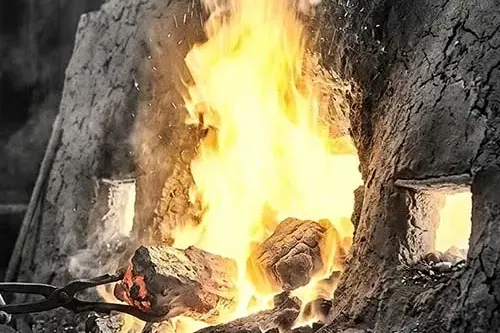
The journey begins with typical 1060 fabrication , a tough material far removed the deluxe katana it will develop into. Experienced bladesmiths apply a detailed process of folding and shaping the base steel, repeatedly burning it and impacting it to separate impurities and fashion a consistent grain structure. This laborious process, often enduring for months , builds the essential toughness and give characteristic of a authentic Japanese weapon . Additional heat processes , including accurate hardening and tempering , are indispensable to achieve the aimed proportion of sharpness, permanence and attractiveness .- Doubling: Reduces impurities and generates grain structure.
- Hammering: Models the steel into the initial blade form.
- Heat Treatment: Regulates the final hardness and flexibility.
The Persistent Magnetism of the Katana: Thorough Examination of Alloy and Modification
The time-honored katana stays a intense symbol within Japanese folklore, its charm far beating mere arms . Forged from traditional steel and commonly featuring intricate motifs , the way of creation itself is a revered art. Beyond the crucial craftsmanship, the ability to personalize a katana - from the temper curve to the shaft wrapping and habaki - permits for a sincerely individual expression for both fans and operators alike. This confluence of ancient steelwork and boundless personalization produces the katana's continued renown across the realm .
